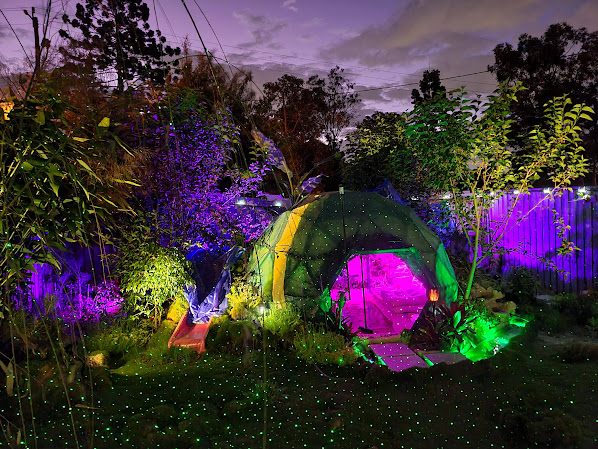
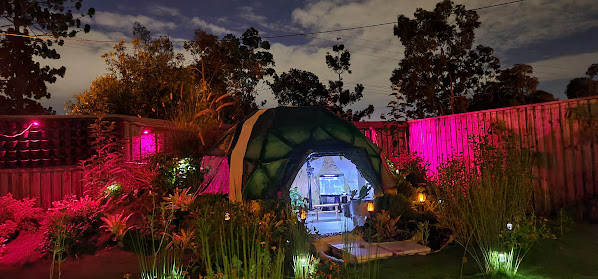
How We Ended Up with a Sci-Fi Techno-Bio-Dome in Our Backyard
It all started when my husband saw a picture on the internet and blurted out, "I can do this."
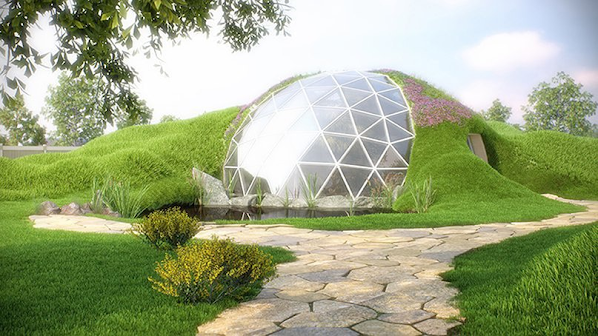
Shortly after, he 3D printed a set of tiny joints and connected them with barbecue skewers to build a small scale model.
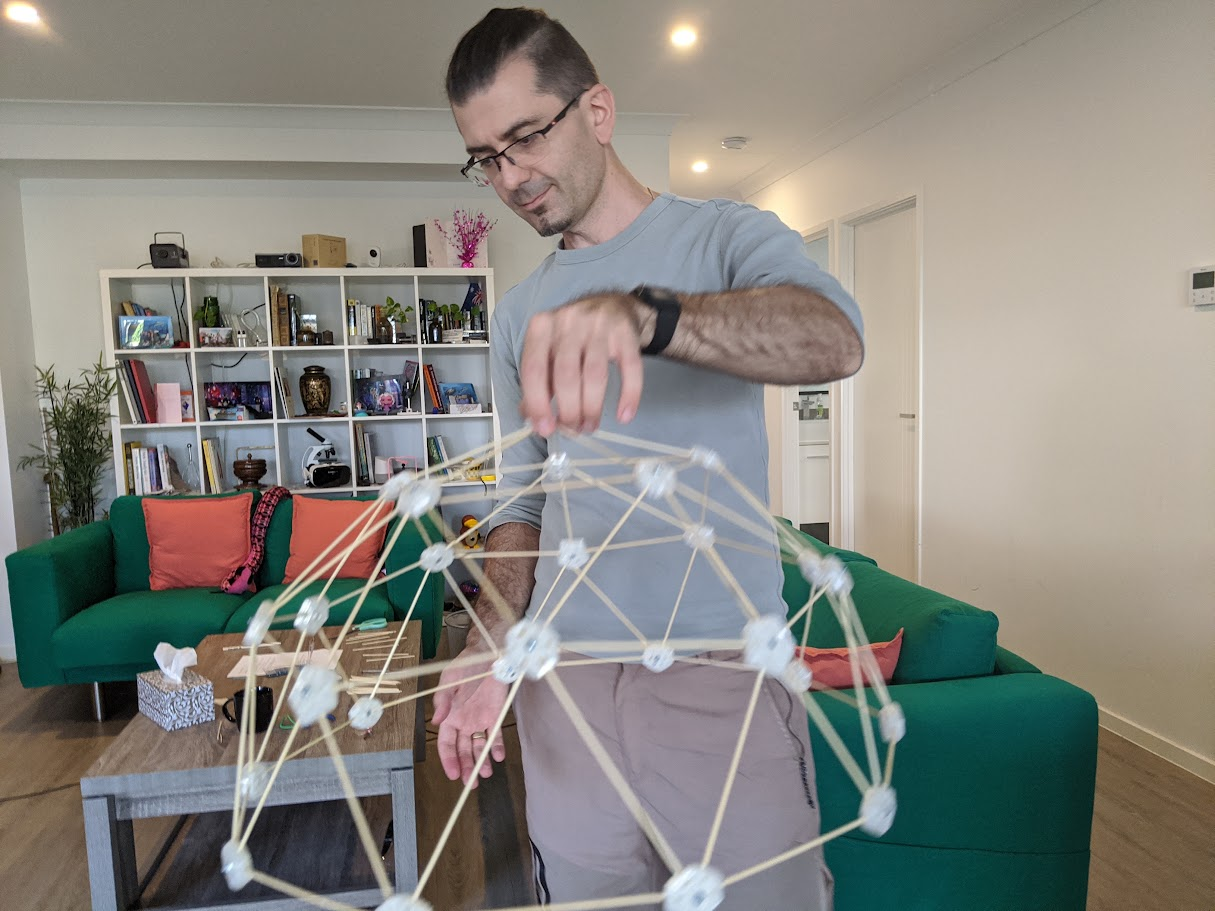
We were living in our old house back then and didn't think much of it. But then we bought a block of land, built a house, and moved in. Soon after that, the pandemic hit, and suddenly we had a bit of spare time to kill.
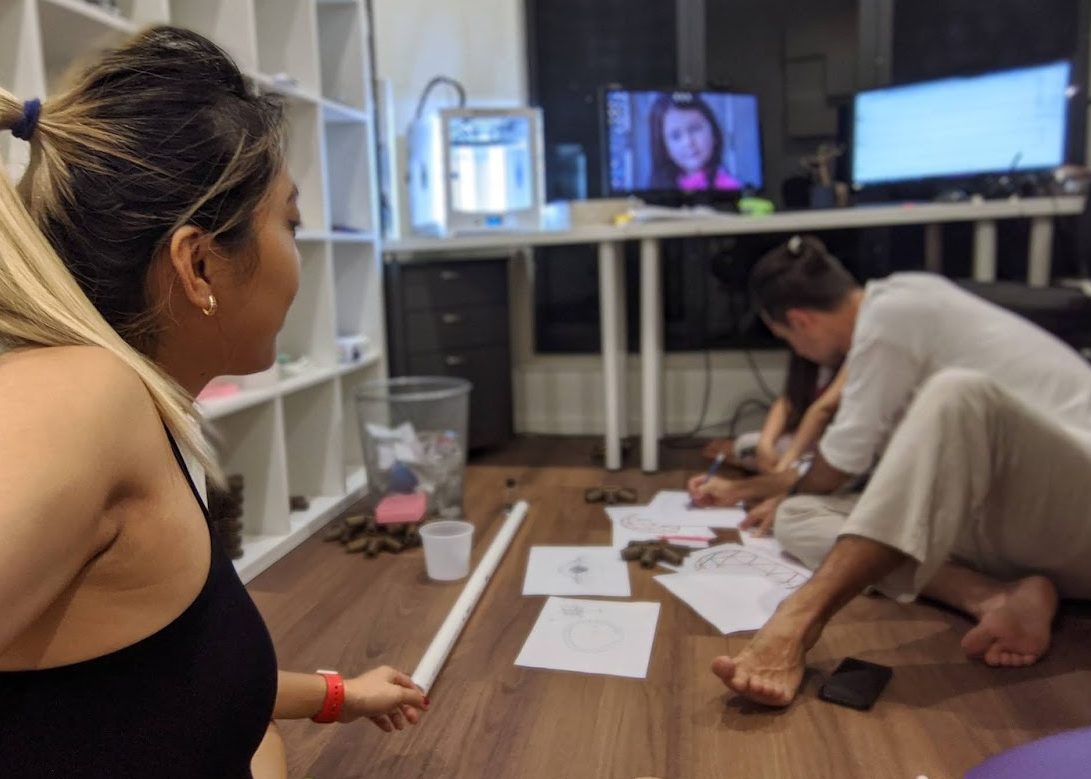
He pulled up an online geodesic dome calculator tool to figure out the dimensions, then did two things: 3D printed all of the joints himself (because buying commercial connector sets online is ridiculously expensive) and ordered the exact calculated amount of PVC pipe from Bunnings.
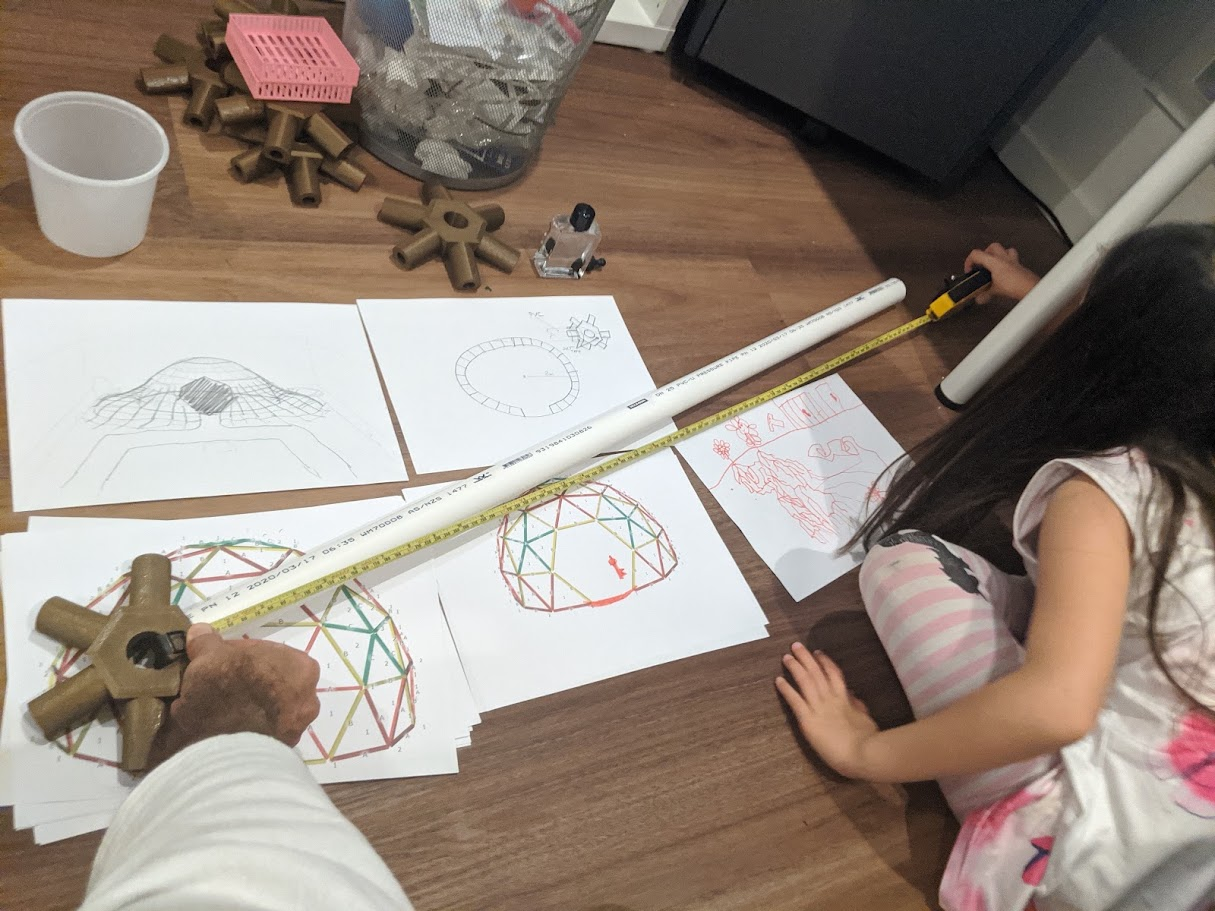
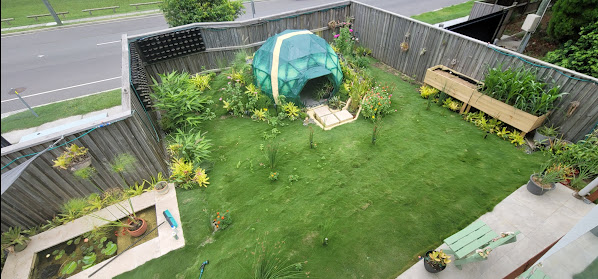
It all had to fit into a specific designated spot we had earmarked in the backyard.
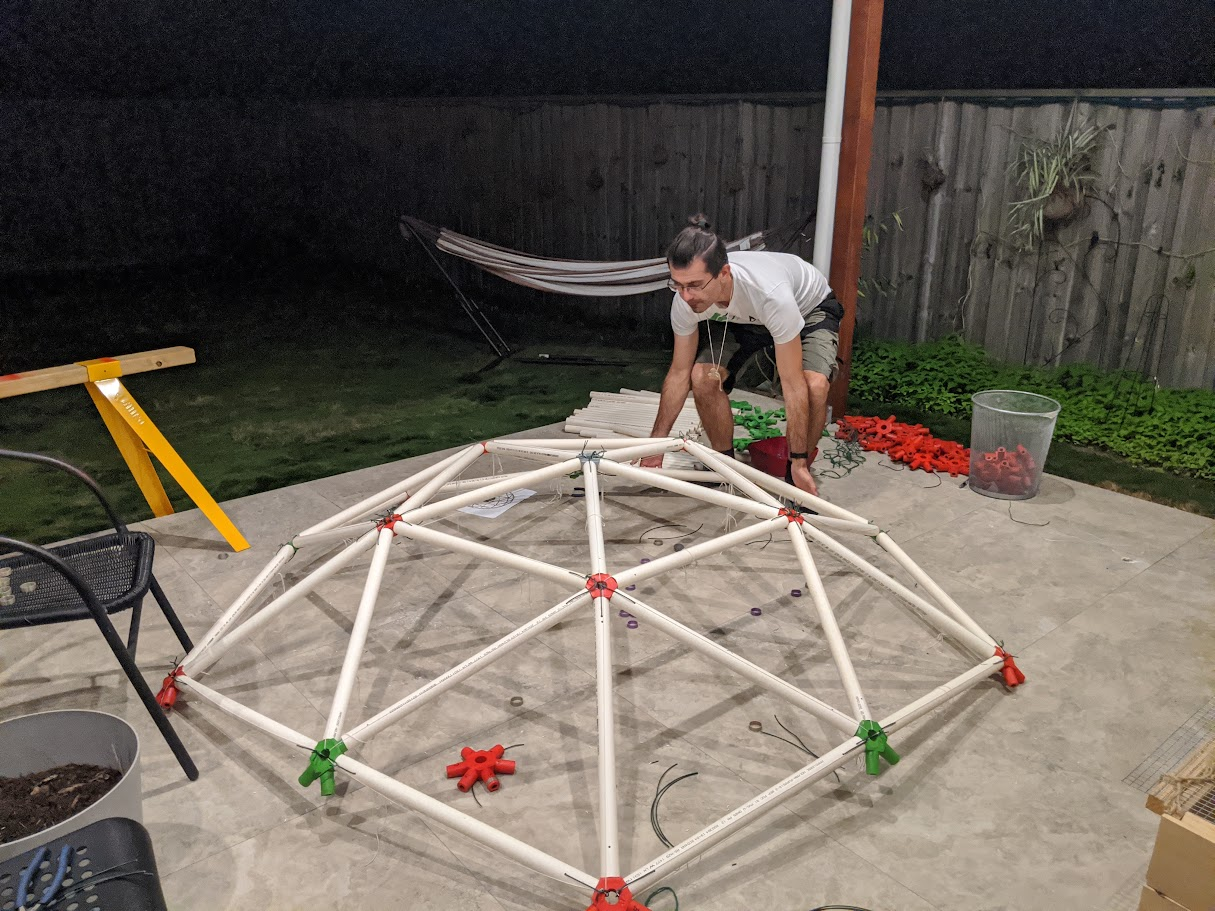
Duct Tape and the Rickety Skeleton
The day we actually went out into the yard to start snapping those PVC pipes into his 3D-printed joints was a total disaster.
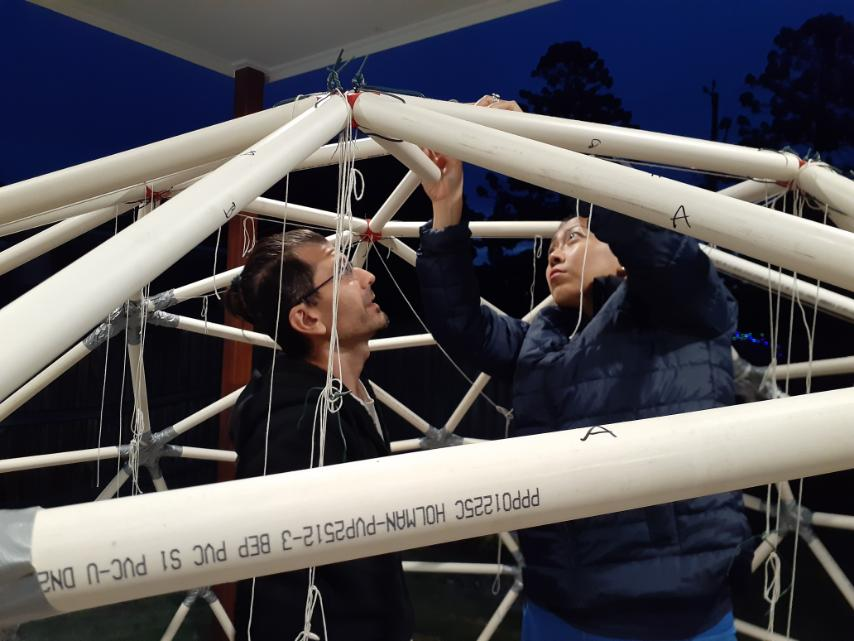
We had no idea how to start or how to properly bind everything together, which led to failure after failure. Eventually, we managed to get it standing by wiring things together temporarily and wrapping it in tape—LOTS of duct tape.
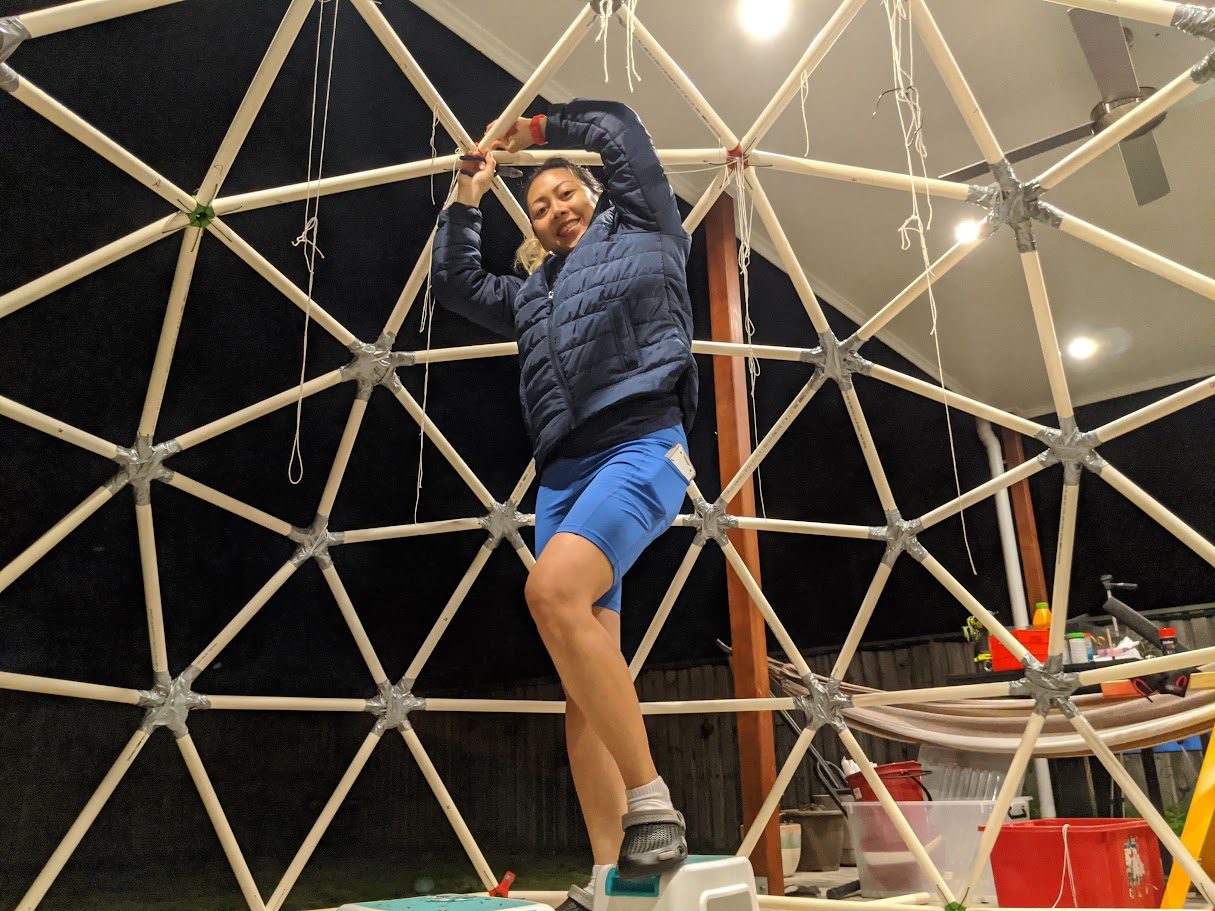
Standing back to look at our creation, the final structure was unbelievably rickety and wobbly.
We weighed our options. We talked about reinforcing it with iron rebar, or even just leaving it as a bare frame and letting climbing plants vine through it. But in the end, we decided if we were going to do this, we should do it properly: fiberglass. The only problem was that neither of us had ever worked with fiberglass before. Where do you get it? What kind do you use? How do you even apply it? You really don't know what you don't know until you're staring at a giant wobbling skeleton in your yard.
Resin Fumes and Breaking Bad
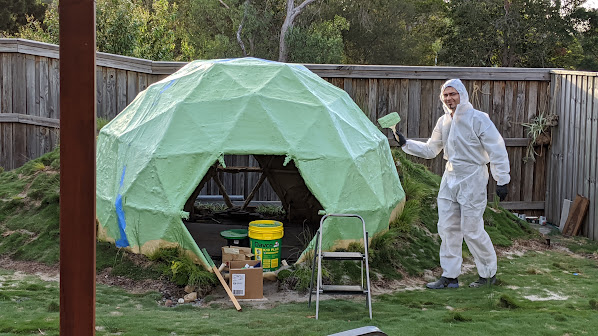
We ordered a giant roll of fiberglass matting straight from China and sourced our resin from a local supplier. We went with polyester resin because it was cheaper than epoxy, but oh boy, did it come with extra complications. Mistakes were definitely made. At one point, my husband realized he was wearing the wrong filter cartridge on his respirator mask—a dust cartridge instead of an organic vapour cartridge—and spent an entire afternoon inhaling polyester fumes. Not good.
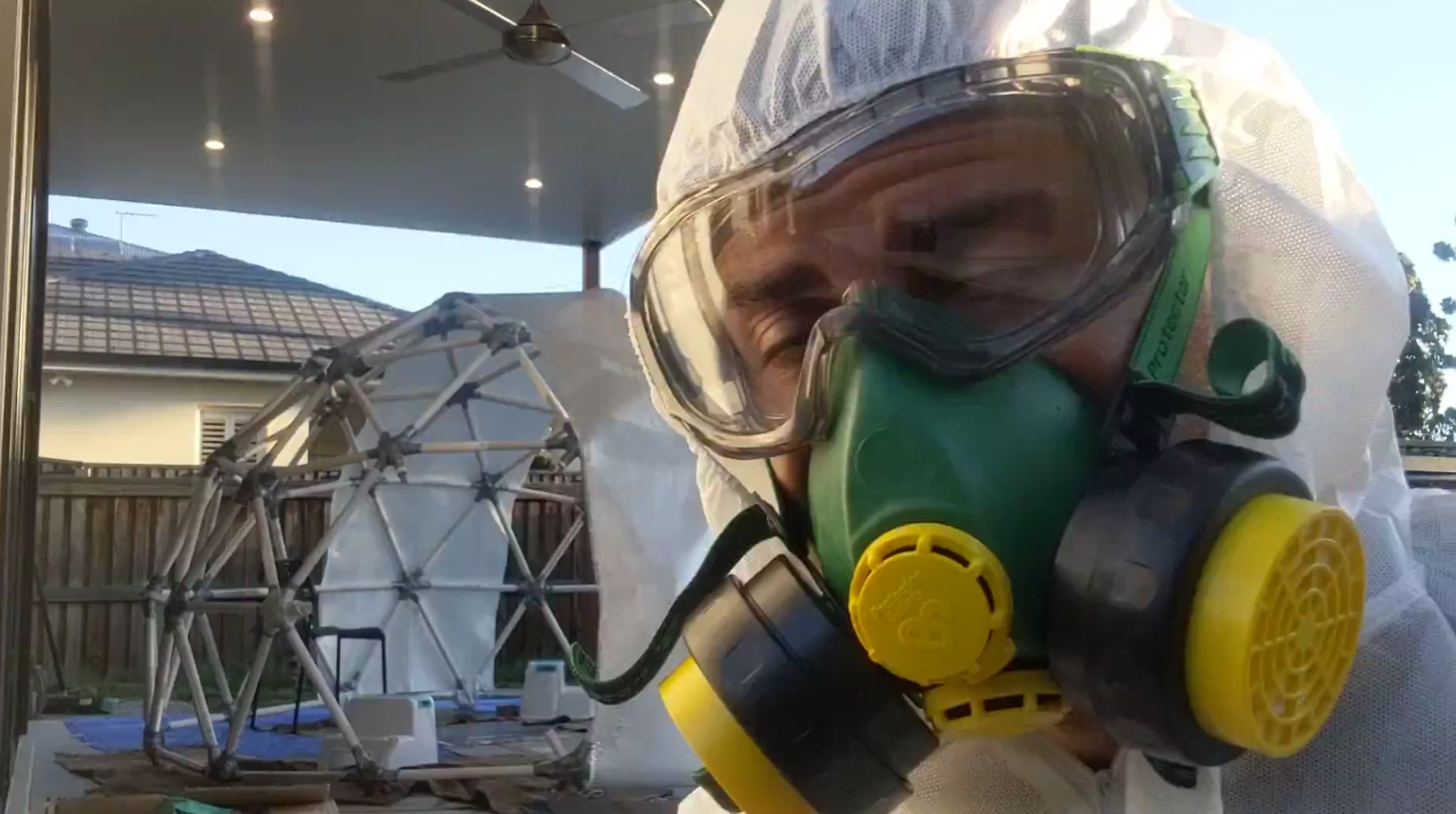
On the bright side, at least he had on a full-face visor and protective coveralls. Between the white suit, the visor, and the overwhelming chemical smell wafting into the air, it looked like we were cooking meth in our backyard like a scene straight out of Breaking Bad. The neighbours definitely noticed the smell, to say the least.
The Great Cart Transport
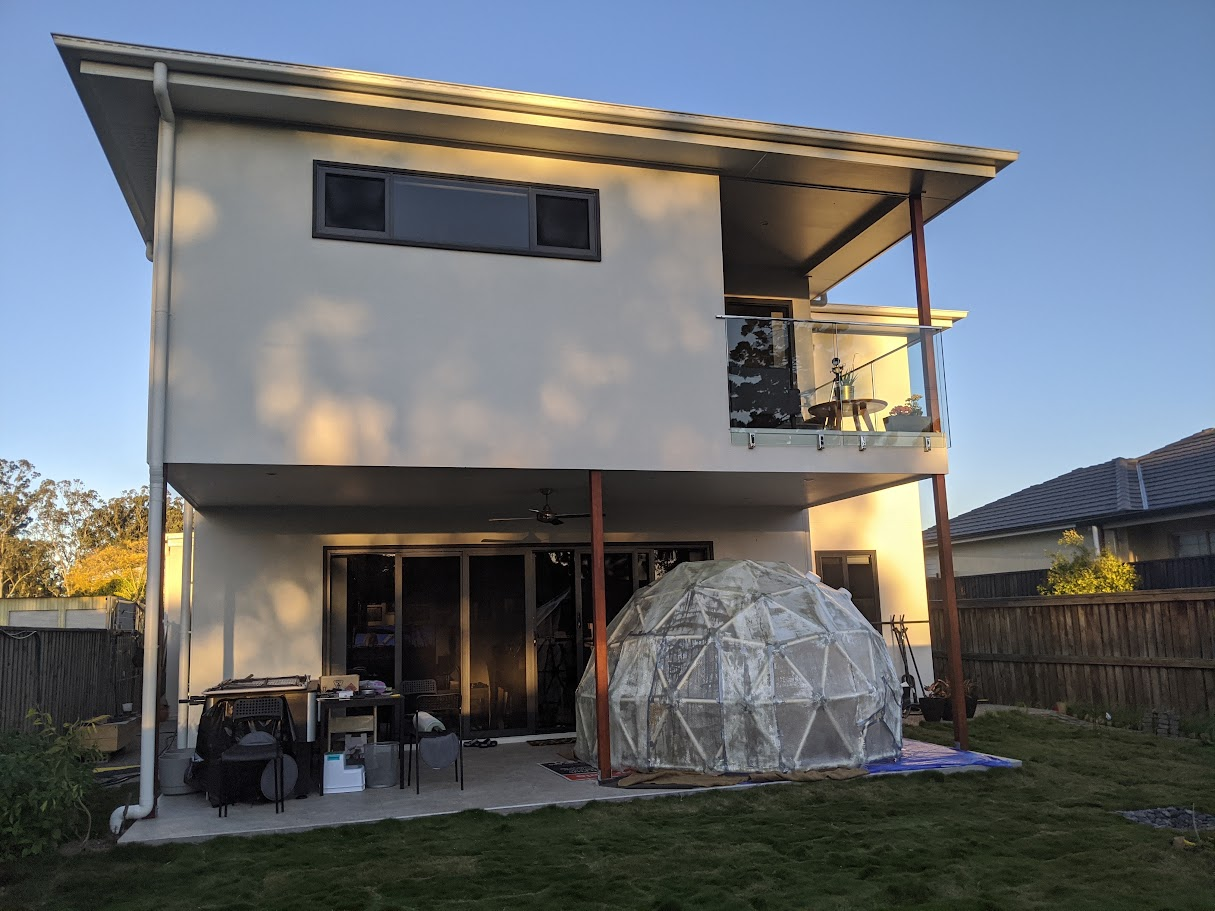
The fiberglassing process took a few weeks. We kept the dome sitting under our patio the entire time to protect it from unpredictable weather while the resin cured.
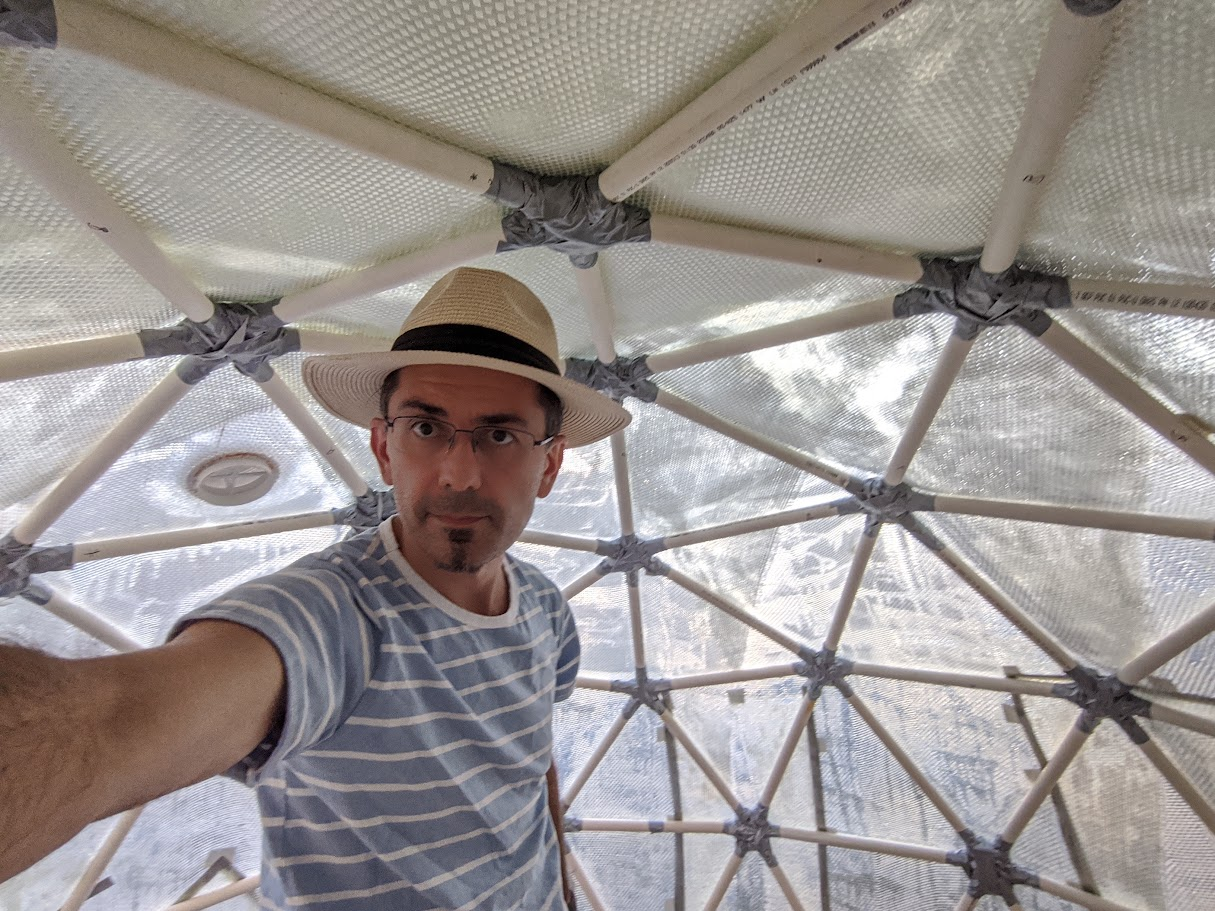
Once it was finally done, it was time to move it to its spot in the yard. That's when we hit a major wall: we couldn't actually lift it. The fiberglass layer made it way too heavy for the two of us.
Moving it turned into a massive effort, and things got pretty tense between us—we almost had a full-blown fight over it. First, we tried using some leftover plastic downpipes from our house build as rails to drag the structure across the lawn, but that didn't work at all.
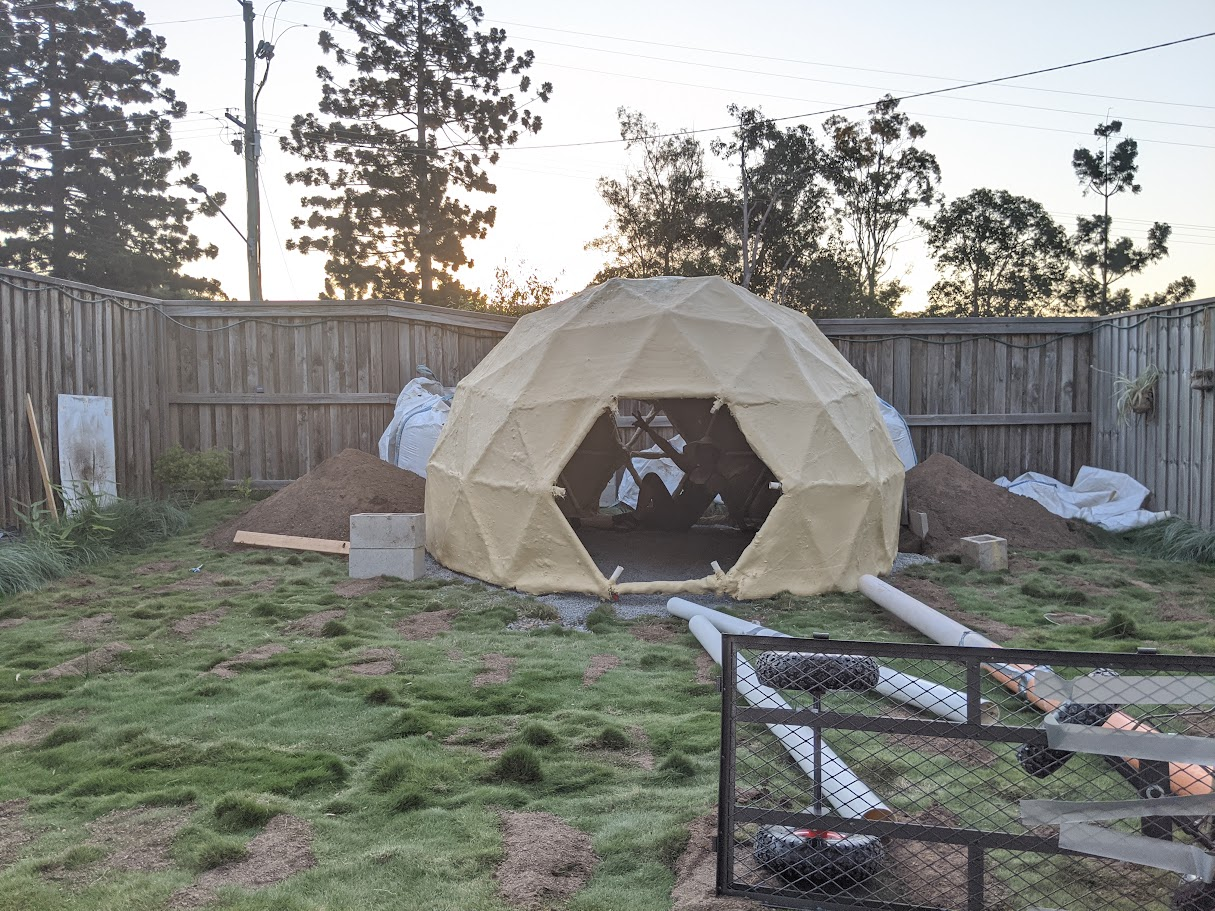
Plan B was placing those downpipes on top of a garden cart, using them as leverage to lift the dome up onto the cart, and slowly, bit by bit, rolling the massive thing across the grass.
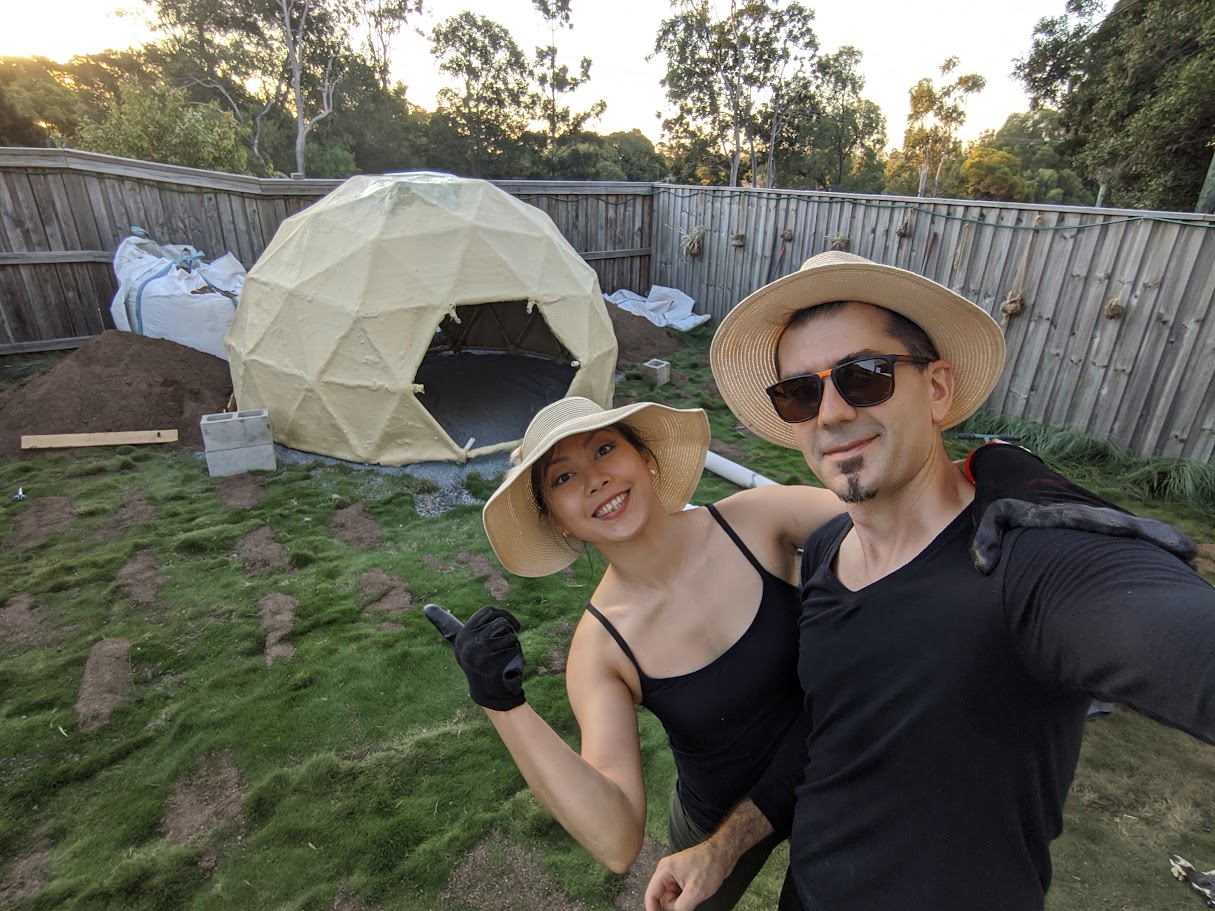
When it finally plopped into place, we looked at each other and said, "Okay, that's it—this thing is never moving again." Fortunately, we had accidentally kept the front entrance oriented correctly facing back toward the patio.
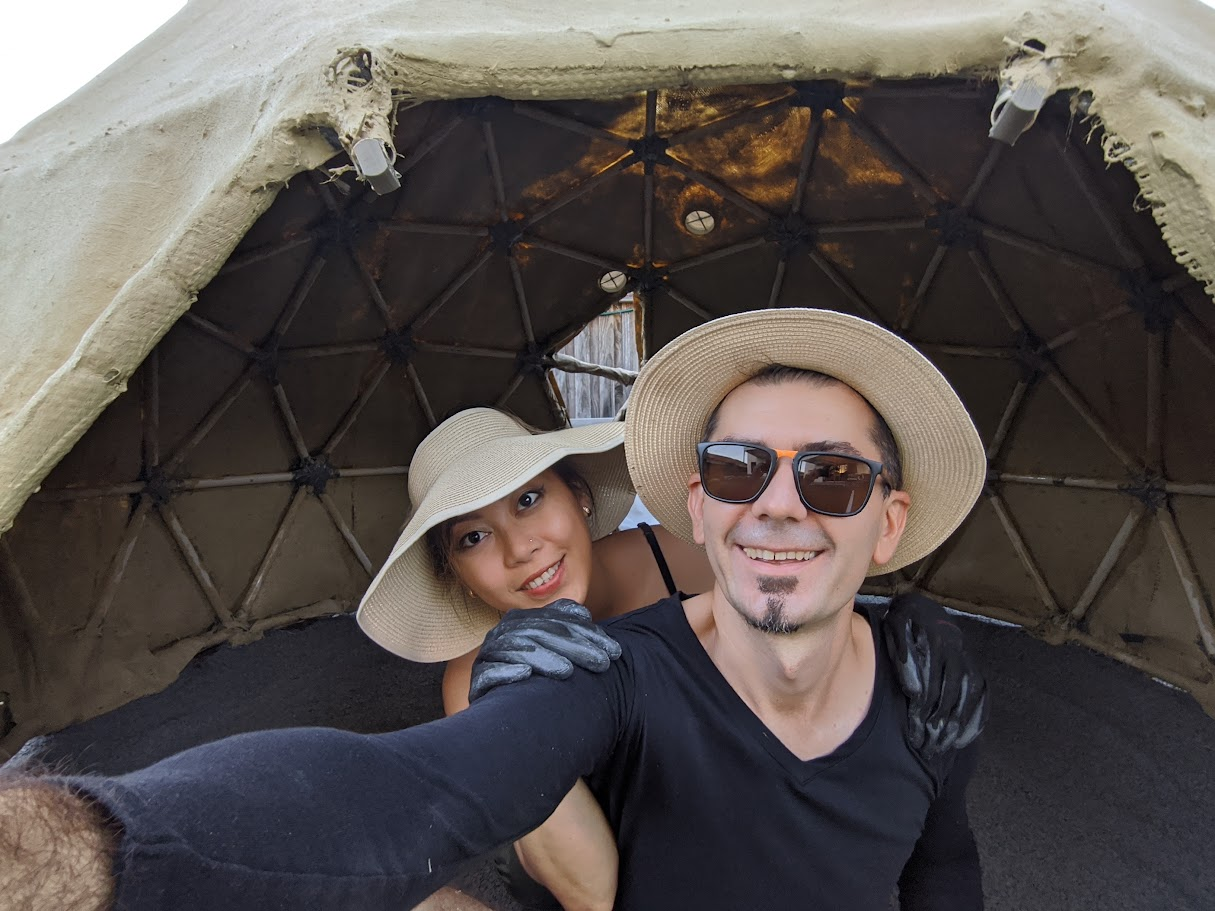
A Sci-Fi Frodo House
Getting the shell into place was only half the battle. To bury it, we ordered several giant bulkabags of soil from a local landscaping company, which had to be lifted across the fence directly from the street side using a crane. That in itself was a whole project!
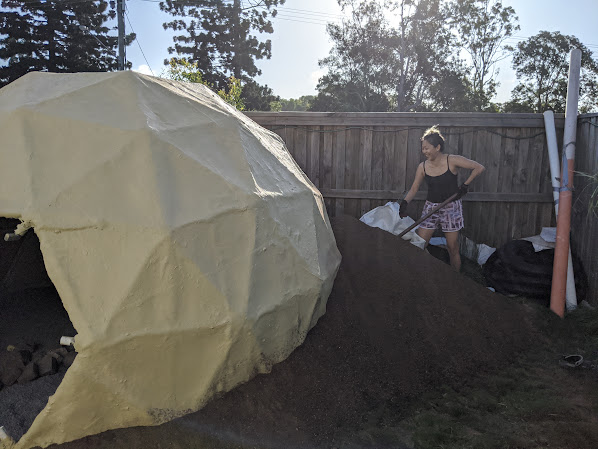
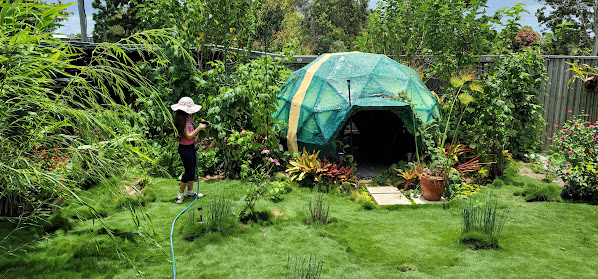
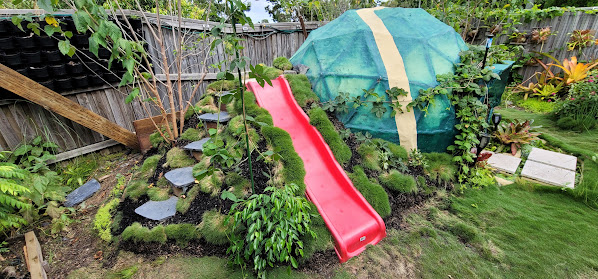
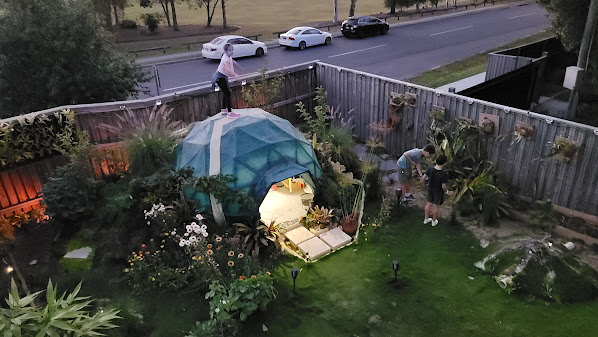
We dumped one bag on each side of the dome and piled soil over the outer fiberglass shell until it gave the appearance of a sci-fi Frodo house.
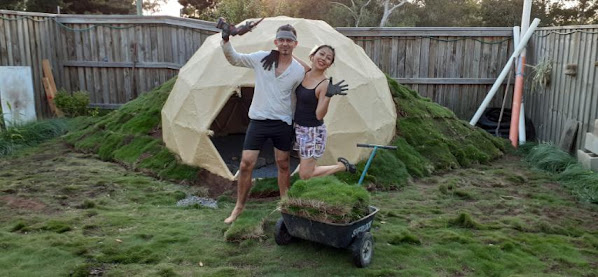
Then we laid grass right over the top and added a red slide coming down one of the grassy soil mounds. Once the grass settled, we painted the visible dome shell green with a crisp white stripe making up my husband's company logo—a detail that is now clearly visible on Google Earth and Google Maps.
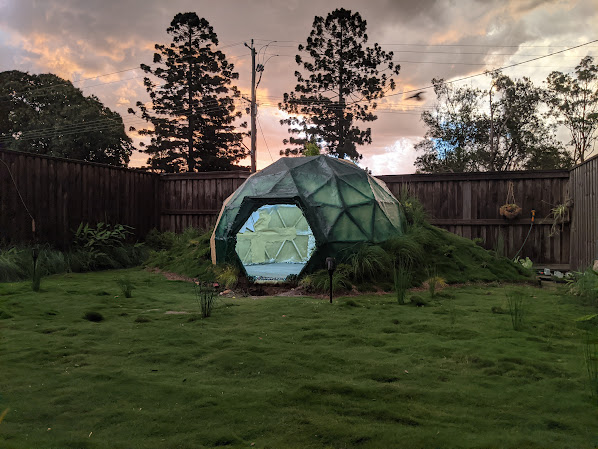
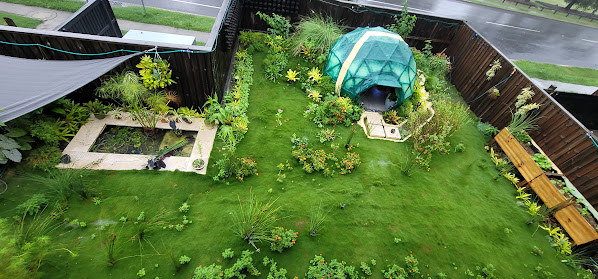
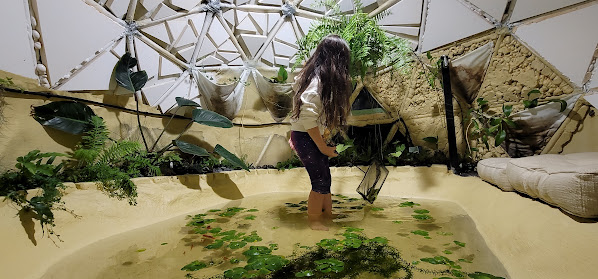
Inside, we tiled the floor and built narrow garden beds around the perimeter, filling them with ferns and orchids.
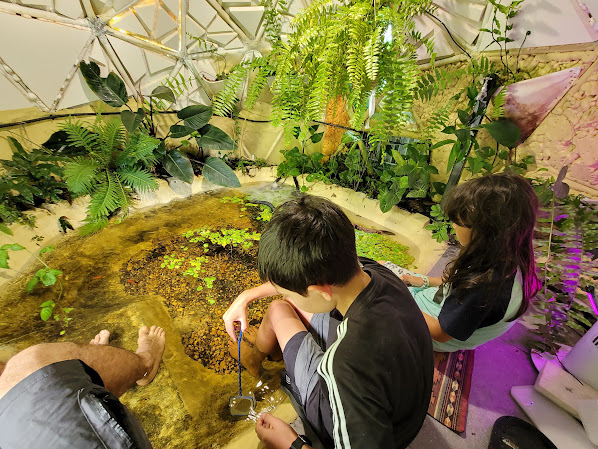
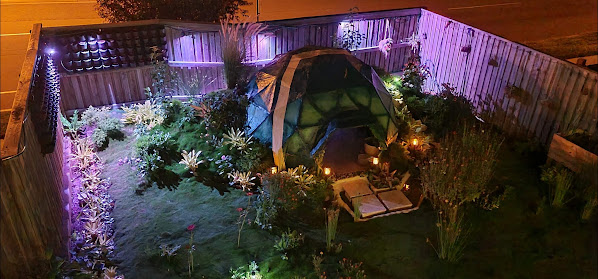
We ran a water tap into the interior, hooked up electricity for lighting and power sockets, and set up a few aquariums.
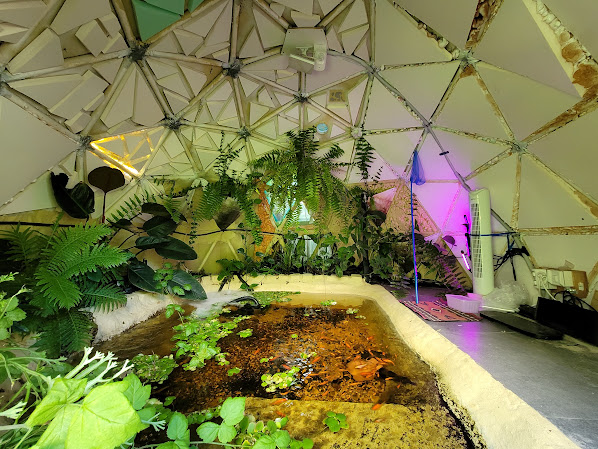
Naturally, we integrated it with our smart home system so we could stand outside and say, "OK, Google, turn on light in the dome."
What started as a silly barbecue-skewer prototype turned into our very own techno-bio-dome.